

If you are a parent of a child with complex picky eating, you know that mealtimes can feel stressful, overwhelming, and even frustrating. You might find yourself constantly asking: How do I get my child to eat?
I want to challenge that question and offer a new perspective, a reframe, that can completely change the way you approach feeding and mealtimes with your child.
In this blog article, I will share strategies for shifting your approach to mealtimes, reducing stress (on both of you), supporting your child’s nervous system, and fostering a positive, pressure-free feeding environment.
Why Pressure Tactics Backfire
When a child struggles with picky eating, it is tempting to turn to strategies like:
Bribes or rewards
Force-feeding
Ultimatums or threats
The “one-bite rule” or “clean-plate club” expectations
Over-celebrating or praising bites
& Other coercion or pressure tactics
I get it. Your instinct is to nourish your child… But the problem with these strategies is that they often create stress in a child’s nervous system. When we pressure them to eat, we risk pushing them into a fight, flight, freeze, or fawn state. Even if they take a bite to get a reward, their body remembers the stress, pressure, and coercion, and the next mealtime can become even harder.
Instead, interactions with food and mealtimes should be positive, low-pressure experiences that support calm, curiosity, and self-regulation.
Reframing the Goal of Mealtimes
So if the goal is not “eating,” what is it? Here’s the reframe:
The goal of mealtimes is not obedient consumption. Instead, it is about building a long-term, healthy relationship with food, mealtimes, their body, and you as their parent (or caregiver).
That means:
Reducing mealtime anxiety
Encouraging curiosity about new foods
Meeting your child where they are in their readiness and development
This approach is helpful for all children but especially those with sensory sensitivities, developmental differences, or pediatric feeding challenges.
Food Chaining: A Gentle Way to Expand Foods
One practical strategy I teach parents to use is called food chaining, a feeding therapy approach popularized by Cheri Fraker, CCC-SLP, CLC and her colleagues. It is a step-by-step way to introduce new foods based on the attributes of foods your child already likes such as taste, texture, color, and temperature.
Here is a simple example:
Your child loves apples. At the grocery store, you explore similar foods, like pears.
Let your child touch, smell, and choose a pear without any pressure or expectation to eat it.
Bring it home and offer it alongside their apple in the same way they enjoy them (sliced, cubed, etc.).
No pressure, no sneaking or deception, and no bribes. Just positive exposure and nervous system safety.
If they try the pear, great. But that’s not the goal. The goal here is to increase familiarity through positive exposure and interaction, which then decreases the “newness anxiety”. You’re providing a learning opportunity!
If they help you wash it and/or cut it up for the meal, that’s a win. If they keep it on their plate, that’s a win. If they’ll touch it with utensils, that’s a win. If they touch it with their fingers, that’s a win. Smell it? Win! Tiny taste with the option to spit it out? Win!
You see where I’m going with this… You work up these “steps” and stop where your child feels comfortable, meeting them where they are. You provide the learning opportunity, gently pushing their resilience without pushing them past their breaking point. The key is to help them stay regulated through out the process, always ending on a positive note.
Over time, these gentle exposures help children become more comfortable with new foods without triggering stress or anxiety.

Start With Small Changes
If your child is not ready to try new foods yet, start small. Even tiny changes to familiar and already preferred foods can be revealing, giving you an idea of their overall resilience to change:
Cutting preferred foods differently (ex: sticks vs. cubes)
Slight texture or temperature adjustments
Observing whether they tolerate small variations or brand changes
These small adjustments can provide insight into oral-motor skills, sensory preferences, level of rigidity, and developmental readiness.
The Long-Term Goal
No matter the underlying contributors to your child’s complex picky eating such as sensory, nutritional, medical, or developmental, the principle is the same:
Pressure is not required for progress.
Research and clinical experience show that pressure tactics may get bites during the meal (short-term), but it rarely supports long-term growth and sustainable changes. One-bite rules and other pressure tactics may get a child to take a bite, but do you think that child is going to willingly, without coercion, want to eat that food independently the next time they see it? Chances are low.
I repeat: The goal of mealtimes is not obedient consumption. Reframe: The goal is building a long-term, healthy relationship with food, mealtimes, their body, and you as their parent (or caregiver).
When we shift the focus to positive, low-pressure experiences, we build a foundation for lifelong healthy eating habits.
Resources to Support You
If this reframe resonated with you, I have two related resources to support your continued learning:
Podcast Episode: Listen to “Reframing the Goal of Mealtimes” from my Picky Eating Series to explore these strategies in more detail and get practical tips you can start using right away.
Free Guide: Download my Do’s and Don’ts for Parents of Complex Picky Eaters here for actionable strategies to make mealtimes calmer and more positive.
You Are Not Alone
Parenting a child with complex picky eating can feel isolating, but you are not alone. With the right tools, strategies, and a nervous-system-informed approach, mealtimes can become calmer and more joyful.
Take it one positive exposure at a time, and remember: the goal is connection, curiosity, and calm, not compliance.
Ready for Deeper Support?
If you’ve made it this far, you may be realizing that supporting your child’s complex picky eating is not about finding the perfect strategy. It is about understanding your child’s unique needs and having a clear framework that helps you both move forward with confidence.
That is exactly why I created Naturally Navigating Picky Eating, my online course for parents.
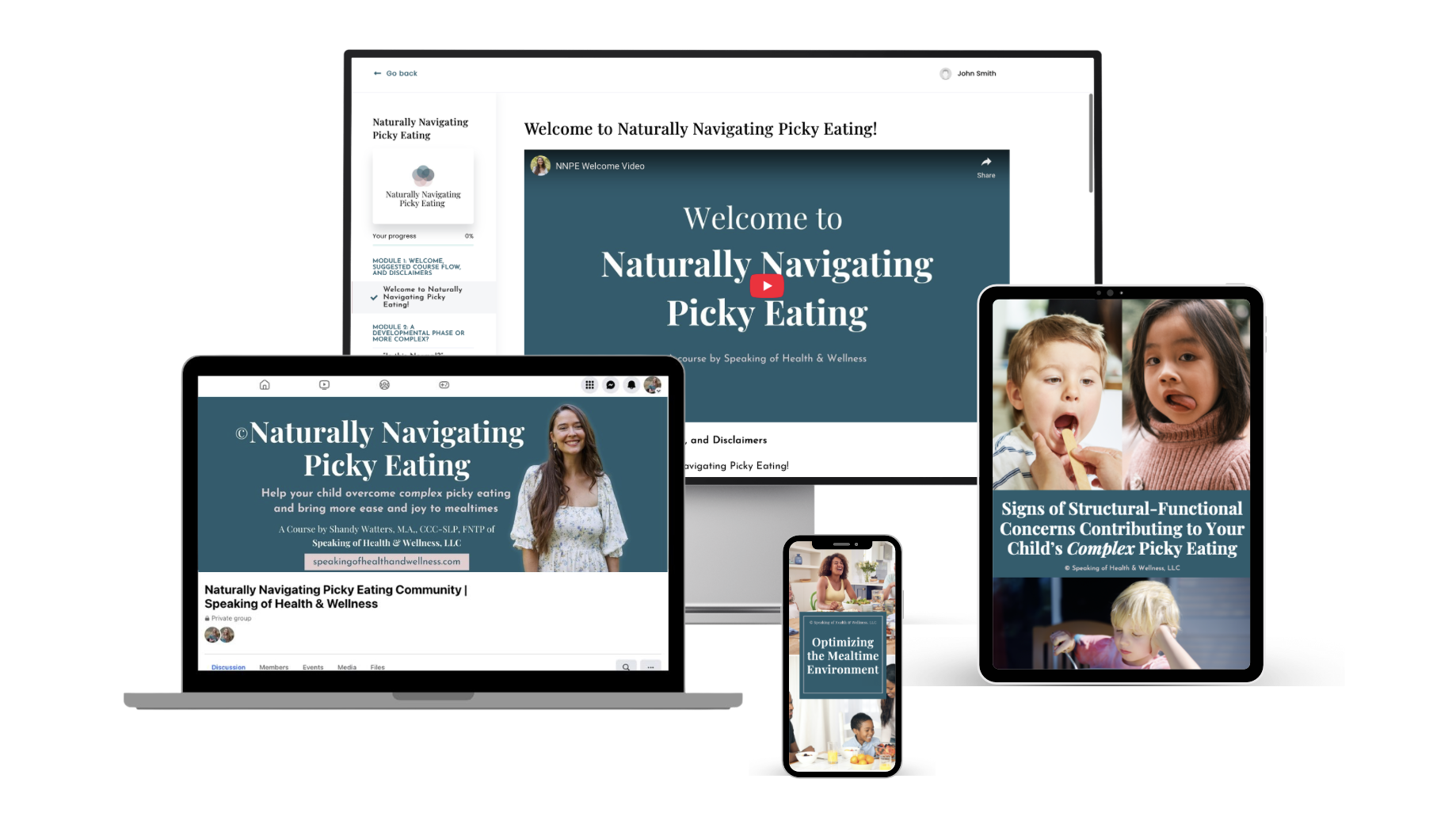
Inside the course, I expand on the principles you learned here and walk you step by step through how to support your child in a way that is practical, respectful, and grounded in both development and nutrition. You will learn how to reduce mealtime stress, support regulation, and expand foods without pressure or power struggles.
The goal is not quick fixes. The goal is helping you understand what is happening beneath the surface so you can make decisions that truly support your child over time.
If you feel ready for deeper guidance and a structured path forward, you can learn more here > Naturally Navigating Picky Eating.
A Final Thought
If mealtimes have felt heavy lately, I hope this perspective gave you a small sense of relief and a new way to look at what your child’s behaviors may be communicating.
Gentle reminder: Change rarely happens all at once. It happens through small shifts in understanding, repeated experiences of safety, and consistency over time.
Thank you for taking the time to learn, reflect, and support your child in such an intentional way. I am truly glad you are here.
Cheering for you and your kiddo,
Shandy Watters, M.A., CCC-SLP, FNTP
Speaking of Health & Wellness, LLC